About Me
Technologist, founder, and healthcare advocate building the future of clinical documentation.
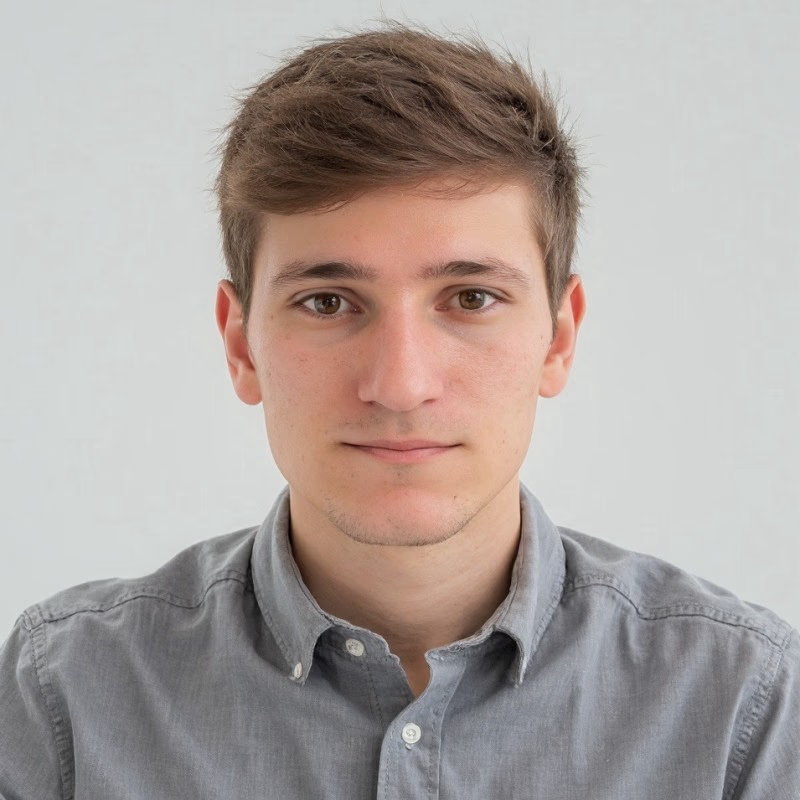
I'm Ryan Yannelli, CTO and Co-founder of Nextvisit AI, where we're transforming clinical documentation through ambient AI technology. My journey in technology spans over 15 years, driven by a belief that well-designed software can fundamentally improve how people work and live.
The Early Years
I started building at 12. My first business in 2009 was web design, learning to turn technical skills into something people would pay for. By 16, I was working as a network engineer at CSDNET, designing and maintaining enterprise infrastructure for hospitals, schools, and institutions. While other kids were learning to drive, I was learning that downtime in a hospital isn't an inconvenience, it's a crisis.
Technical Evolution
From 2018 to 2020, I worked as a professional services engineer at LISS Technologies, leading VoIP implementations, Microsoft Exchange migrations, and M365 deployments through their nSpeak subsidiary. Then I moved into operations leadership, managing data centers, engineering teams, and infrastructure for telecommunications services.
My technical journey has been one of continuous learning. Starting with PHP and JavaScript, I've evolved alongside the industry, embracing TypeScript, modern frameworks like Vue.js, and now the transformative power of AI and machine learning. Each shift reinforced my belief that the best engineers are perpetual students.
Building Nextvisit AI
In 2021, I partnered with Dr. Faisal Rafiq, a practicing psychiatrist who understood firsthand the documentation burden facing clinicians. Together, we built Nextvisit AI to solve a real problem: doctors spending more time with computers than patients.
Today, Nextvisit helps behavioral health providers cut documentation time by 70%, reclaim hours every day, and get home on time. Practices using our platform report 30% revenue increases through same-day billing and measurable improvements in patient retention. In 2025, we joined the LAUNCH Accelerator (Cohort LA35), continuing to build what we wished existed yesterday.
Living with Type 1 Diabetes
In November 2023, I was diagnosed with Type 1 Diabetes at 26. I was already two years into building Nextvisit when I suddenly found myself on the other side of the healthcare equation. It's one thing to build tools for clinicians. It's another to sit in the patient chair and understand why every moment of their attention matters.
I now use DIY Loop daily with Omnipod and Lyumjev, part of the open-source diabetes technology movement that refuses to wait for perfect solutions. This experience directly influences my work. People die when they can't afford insulin. Healthcare technology should make lives better, not just processes faster.
Philosophy
I believe in building things that matter. Technology should solve real problems, not create new ones. The best products come from deep understanding of user needs, relentless iteration, and a willingness to challenge conventional approaches.
Outside of work, you'll find me exploring the latest AI developments, contributing to open source projects, and advocating for diabetes awareness. I'm always happy to connect with fellow founders, healthcare innovators, or anyone passionate about using technology for good.
Key moments in my journey
Founded first company at age 12, building websites
Network Engineer at 16, designing infrastructure for hospitals, schools, and institutions
Professional Services Engineer, leading VoIP projects, Exchange migrations, and M365 deployments
Director of Operations, managing data centers, infrastructure, and engineering teams
Co-founded Nextvisit AI with Dr. Faisal Rafiq
LAUNCH Accelerator (LA35), helping clinicians cut documentation time 70% and get home on time
Technologies and areas I work with
Let's connect
Interested in working together or just want to chat about technology and healthcare?
Get in touch